Navratri 2026: Dates, 9 Days of Durga Puja, Vidhi & Spiritual Significance
Navratri is one of the most important and widely celebrated Hindu festivals dedicated to Goddess Durga and her nine divine forms. Celebrated with immense devotion across India, this sacred festival symbolises the victory of good over evil and the power of divine feminine energy, also known as Shakti.
During Navratri, devotees worship Maa Durga, observe fasts, perform traditional puja rituals, chant sacred mantras and participate in devotional celebrations. From Ghatasthapana to Durga Ashtami and Kanya Pujan, every day of Navratri has its own spiritual significance.
If you are looking for information about Navratri 2026, Navratri Puja Vidhi, Durga Puja, Ghatasthapana Muhurat or Nav Durga worship, this guide covers everything you need to know.
What Is Navratri and Why Is It Celebrated?
The word Navratri comes from two Sanskrit words: 'Nav', meaning nine, and 'Ratri', meaning nights.
Navratri is celebrated over nine nights and ten days in honour of Goddess Durga and her nine forms, collectively known as Navdurga.
According to Hindu traditions, the festival celebrates the victory of Goddess Durga over the demon Mahishasura. This represents the triumph of righteousness, courage and divine power over negative forces.
Devotees celebrate Navratri by performing Durga Puja, fasting, chanting mantras, organising devotional programmes and seeking the blessings of Maa Durga.
Sharad Navratri 2026: Dates and Important Rituals
Sharad Navratri is traditionally observed during the Hindu month of Ashwin.
For Sharad Navratri 2026, devotees should consult the local Hindu Panchang for the exact Tithi timings and Ghatasthapana Muhurat.
Important occasions during the festival include:
- Ghatasthapana – Beginning of Navratri.
- Durga Puja – Daily worship of Maa Durga.
- Durga Ashtami – Special worship on the eighth day.
- Maha Navami – Worship of Maa Siddhidatri.
- Kanya Pujan – Worship and honouring of young girls.
- Vijayadashami – Celebration of the victory of good over evil.
Nine Forms of Goddess Durga Worshipped During Navratri
Each day of Navratri is dedicated to one of the nine forms of Maa Durga.
Day 1: Maa Shailputri
Maa Shailputri is worshipped on the first day of Navratri. She represents purity, strength and devotion.
Devotees pray to Maa Shailputri for stability, courage and spiritual strength.
Day 2: Maa Brahmacharini
The second day is dedicated to Maa Brahmacharini, who represents devotion, penance and determination.
Her worship reminds devotees of patience, discipline and dedication.
Day 3: Maa Chandraghanta
Maa Chandraghanta is worshipped on the third day. She represents courage, bravery and protection.
Devotees seek her blessings for peace and strength.
Day 4: Maa Kushmanda
The fourth day is dedicated to Maa Kushmanda, who is traditionally associated with the creation of the universe.
Her worship symbolises energy, positivity and prosperity.
Day 5: Maa Skandamata
Maa Skandamata is worshipped on the fifth day of Navratri.
She represents motherhood, affection and compassion. Devotees seek her blessings for family happiness and well-being.
Day 6: Maa Katyayani
The sixth day is dedicated to Maa Katyayani, a powerful form of Goddess Durga.
She symbolises courage, determination and the destruction of negative forces.
Day 7: Maa Kalaratri
Maa Kalaratri is worshipped on the seventh day.
She represents the powerful protective energy of Goddess Durga and is traditionally associated with the removal of darkness and fear.
Day 8: Maa Mahagauri
The eighth day is dedicated to Maa Mahagauri, who symbolises purity, peace and compassion.
Many devotees perform special Durga Ashtami Puja and Kanya Pujan on this day.
Day 9: Maa Siddhidatri
Maa Siddhidatri is worshipped on the ninth day of Navratri.
She represents divine blessings, wisdom and spiritual fulfilment.
Ghatasthapana: Significance and Puja Vidhi
Ghatasthapana marks the beginning of Sharad Navratri.
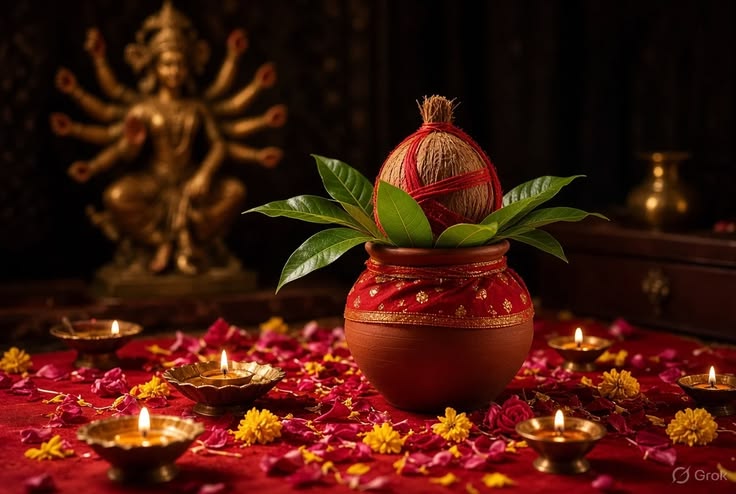
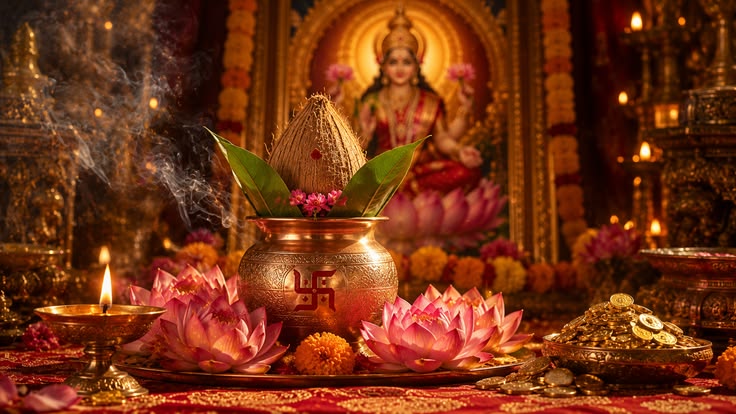
It involves establishing a sacred Kalash as a symbol of divine energy and inviting the blessings of Maa Durga into the home.
Samagri Required for Ghatasthapana
Commonly used puja items include:
- Earthen pot or Kalash.
- Clean soil.
- Barley seeds (Jau).
- Coconut.
- Mango or Ashoka leaves, according to tradition.
- Red cloth.
- Roli and Akshat.
- Flowers and garlands.
- Ganga Jal or sacred water.
- Diya and incense sticks.
How to Perform Ghatasthapana
- Clean the puja area and prepare the altar.
- Place clean soil in an earthen pot.
- Sow barley seeds in the prepared soil.
- Fill the Kalash with water and traditional offerings.
- Decorate the Kalash and place a coconut on top as per the prescribed ritual.
- Perform Ganesh Puja and invoke Maa Durga.
- Light a Diya and offer flowers, fruits and Prasad.
- Begin daily Navratri worship with devotion.
The exact procedure and Muhurat should be followed according to the local Panchang and family traditions.
Navratri Puja Vidhi at Home
Devotees perform daily Navratri Puja to seek the blessings of Maa Durga.
A traditional daily worship routine may include:
- Wake up early and take a bath.
- Clean the puja area.
- Light a Diya before Maa Durga.
- Offer fresh flowers, fruits and Prasad.
- Recite Durga Chalisa or Durga Saptashati, according to tradition.
- Chant Maa Durga mantras.
- Perform Aarti.
- Distribute Prasad among family members.
Devotees may also organise Durga Saptashati Path, Durga Puja and special Havan during Navratri.
Durga Ashtami and Kanya Pujan
Durga Ashtami is one of the most significant occasions during Navratri.
On this day, devotees perform special worship of Maa Mahagauri and organise traditional Kanya Pujan.
Kanya Pujan is a Hindu tradition in which young girls are honoured as representations of the divine feminine energy.
The ceremony commonly includes:
- Inviting young girls for the puja.
- Washing their feet as a mark of respect.
- Offering food such as Puri, Chana and Halwa.
- Giving traditional gifts or Dakshina.
- Seeking their blessings.
The ritual is performed with devotion and respect according to family customs.
Benefits and Spiritual Significance of Navratri Puja
Navratri is considered an important time for prayer, devotion and spiritual discipline.
Devotees believe that worshipping Maa Durga during these nine sacred days helps them:
- Develop inner strength and confidence.
- Practise discipline and devotion.
- Seek divine blessings for family well-being.
- Focus on spiritual growth.
- Celebrate the victory of good over evil.
- Connect with traditional Hindu culture and values.
Why Book a Pandit for Navratri Puja?
Performing Navratri rituals according to traditional Vedic procedures requires proper preparation and knowledge of the puja vidhi.
An experienced Pandit Ji can guide families through:
- Ghatasthapana and Kalash Sthapana.
- Durga Puja and Navdurga worship.
- Durga Saptashati Path.
- Navratri Havan.
- Durga Ashtami Puja.
- Kanya Pujan and Maha Navami rituals.
If you are planning a special Navratri celebration, arranging a Pandit in advance can help ensure that the required rituals and preparations are organised properly.
Book Navratri Puja and Durga Puja Services
Celebrate the sacred festival of Navratri with devotion and traditional Hindu rituals.
Whether you are planning Ghatasthapana, Durga Saptashati Path, Navratri Havan, Durga Ashtami Puja or Kanya Pujan, proper guidance can make your religious celebration more meaningful.
Connect with us to enquire about Navratri Puja arrangements, Pandit booking, ritual procedures and available dates.
Welcome Maa Durga into your home and celebrate the nine divine nights with faith, devotion and positivity.
Jai Mata Di! 🙏
Frequently Asked Questions About Navratri
1. How many days is Navratri celebrated?
Navratri is traditionally celebrated over nine nights and ten days, with worship dedicated to the nine forms of Goddess Durga.
2. What is Ghatasthapana?
Ghatasthapana is the sacred ritual performed at the beginning of Navratri to establish the Kalash and invoke the blessings of Maa Durga.
3. Which nine forms of Durga are worshipped during Navratri?
The nine forms are Maa Shailputri, Brahmacharini, Chandraghanta, Kushmanda, Skandamata, Katyayani, Kalaratri, Mahagauri and Siddhidatri.
4. Can we perform Navratri Puja at home?
Yes. Families can perform daily Navratri Puja at home according to their traditions. A Pandit Ji can also guide them through special ceremonies.
5. What is performed on Durga Ashtami?
Devotees perform special Durga Puja, prayers, offerings and often Kanya Pujan on Durga Ashtami.
6. Can I book a Pandit for Navratri Puja?
Yes. You can enquire about Pandit availability for Ghatasthapana, Durga Saptashati Path, Havan and other Navratri ceremonies.
7. What is the significance of Kanya Pujan?
Kanya Pujan is a traditional ritual in which young girls are honoured as representations of Goddess Durga's divine feminine energy.